
News
Nencki Institute Attracts Dr Kai Ling Liang to Launch New Leukemia Research Laboratory
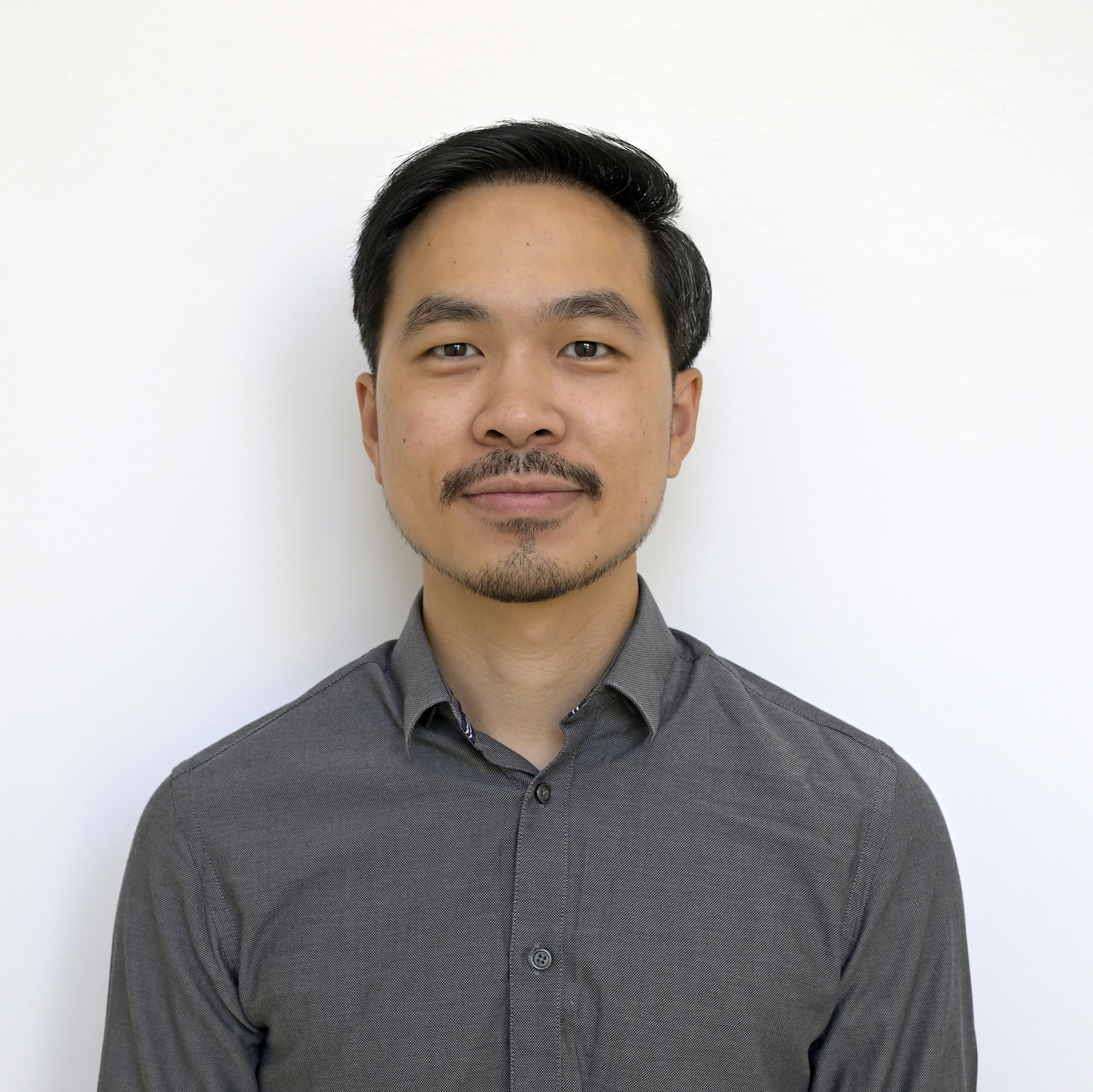
Dr Kai Ling Liang, who previously worked at Ghent University in Belgium, has won an open competition to become a new research group leader and will establish a laboratory focused on uncovering the causes of leukemia — a group of potentially life-threatening blood cancers. One of the main directions of his research will be the search for the molecular mechanisms driving chronic lymphocytic leukemia, a disease that most commonly affects older adults.
The Nencki Institute is among the few scientific institutions in Poland that have, for years, run open international competitions for research group leader positions. "This is a proven model that allows us to attract outstanding scientists from around the world and to develop research aligned with the most important scientific trends. The fact that Kai Ling Liang chose to join our institute confirms that we are an attractive place not only for Polish scientists, but for international researchers as well," says Prof. Agnieszka Dobrzyń, Director of the Nencki Institute.
Dr Kai Ling Liang was selected through an international competition for the position of research group leader, conducted by the Nencki Institute's International Advisory Board. "As the winner, he then applied for funding for his group under the TOP200 NAWA program — and received it, which is excellent news, as it allows the new group to develop dynamically right from the start," adds Prof. Dobrzyń.
The Nencki Institute's new group leader spent nearly ten years at the prestigious University of Ghent, where he studied the development of T lymphocytes — a type of white blood cell. He was particularly interested in the protein TNFR2 (tumor necrosis factor receptor 2), one of two major receptor proteins that bind the cytokine TNF, a key regulator of inflammatory and immune responses. TNFR2 is found on the surface of white blood cells, including lymphocytes.
"We showed that activation of this protein (TNFR2) supports the proliferation of developing T lymphocytes. That led me to ask whether this receptor might play a similar role in leukemia, where these cells proliferate in an uncontrolled way. This hasn't been studied before, and it's exactly what my team at the Nencki Institute will investigate," explains Dr Kai Ling Liang.
The newly formed group will also examine whether knowledge of this receptor can be used to more effectively produce healthy blood cells outside the body.
"We want not only to better understand the underlying biological mechanisms, but also to explore how these discoveries can be applied in practice. One possibility is to search for TNFR2-targeted therapies for selected blood disorders. Another is to use this receptor to improve the production of blood cells for cell-based therapies," says the researcher.
Interestingly, alongside the offer from the Nencki Institute, Dr Kai Ling Liang also received an offer to establish his own research group at an academic center in Wuhan, China — one that came with substantial funding from the China National Science Fund for the first three years. He chose Warsaw instead, despite the challenge of learning a new language. In making his decision, he weighed not only the conditions for getting started, but above all the prospects for developing his research over the following years.
"For a group leader, it's not just about start-up funding — it's about whether you'll be able to keep developing your research over the next ten or twenty years. In Poland's case, I was convinced by the possibility of applying for further grants, including from NAWA and NCBR, which are also open to researchers from abroad. I was also looking for an institute that would support my work, give me autonomy, and let me pursue my own ideas. That's why I chose the Nencki Institute," the scientist emphasizes.
About Institute:
The Marceli Nencki Institute of Experimental Biology was founded in Warsaw in 1918 on the initiative of Kazimierz Białaszewicz, Edward Flatau, and Romuald Minkiewicz. The institute is named after Marceli Nencki (1847–1901), an eminent Polish chemist, physician, and physiologist who worked in Bern and St. Petersburg and is regarded as one of the founders of modern biochemistry.
Researchers at the Nencki Institute of the Polish Academy of Sciences develop state-of-the-art research methods that, combined with precision tools, enable ambitious, interdisciplinary scientific projects. The institute's core research focuses on new therapies and diagnostic methods for neurodegenerative diseases, metabolic disorders, cancer, and other conditions affecting people today. Its scientific work is supported by specialized core facilities, which — alongside conducting their own research — offer a broad range of services, including preclinical studies, DNA sequencing, advanced cytometry, and biological imaging ranging from light and electron microscopy to magnetic resonance imaging. The institute's innovation strategy has led to a steady increase in publications and in domestic and international patents, while also fostering collaboration between the institute and industry.
Date
10 August 2026
Gallery