
News
The type of medication a person is taking can be inferred from an EEG recording
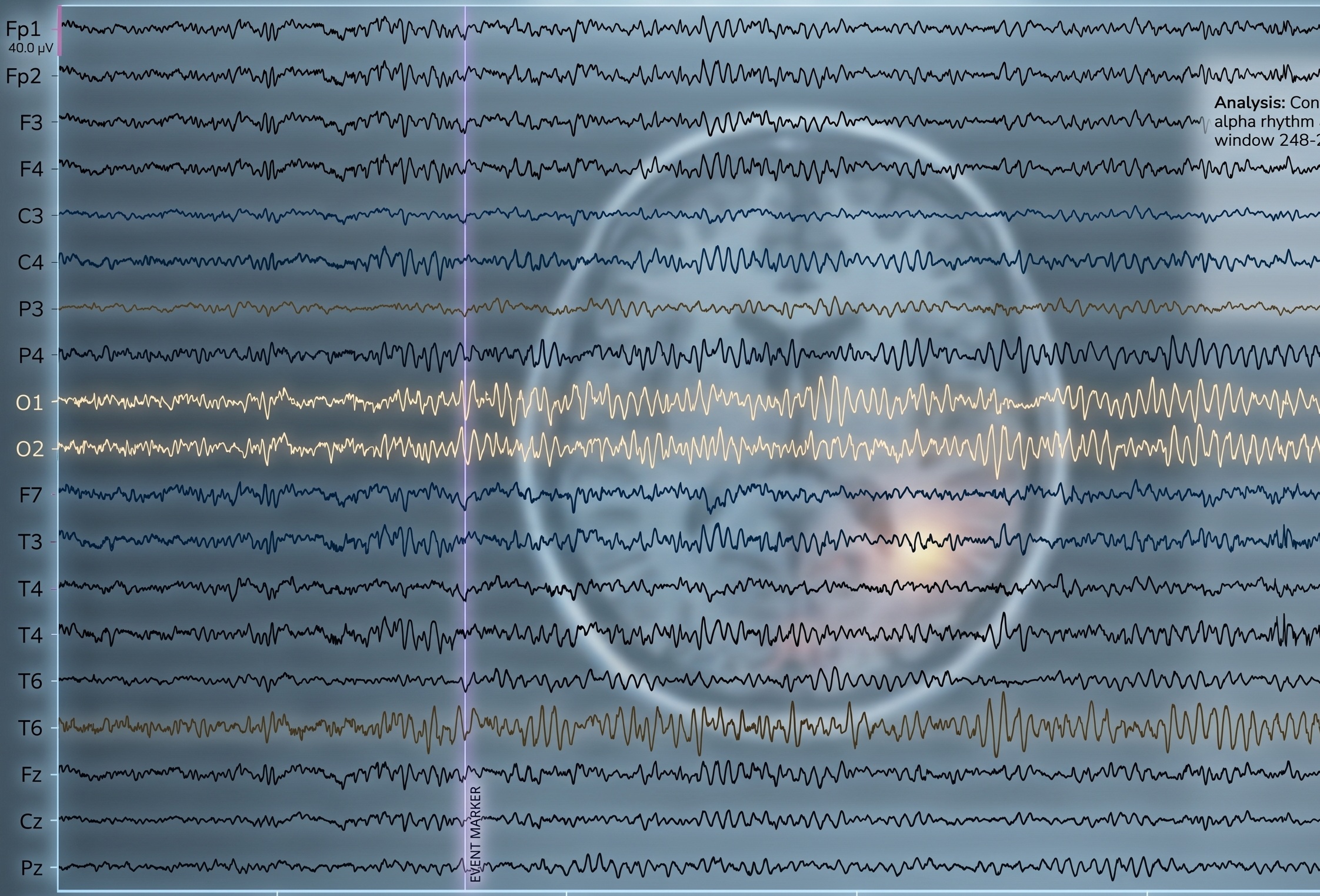
Analysis of more than 24,000 EEG recordings and over 75,000 variables extracted from them has revealed how psychiatric medications affect the brain's electrical activity. Thanks to the findings of a team led by Prof. Jan Kamiński from the Nencki Institute, it may become possible to determine whether a patient is taking their prescribed medication and whether it is producing the intended therapeutic effect. The study has been published in eBioMedicine, a prestigious journal from The Lancet group.
The research, carried out by the Laboratory of Neurophysiology of the Mind at the Nencki Institute of Experimental Biology, Polish Academy of Sciences, is the largest analysis of its kind ever conducted. Previous studies have typically focused on the effects of a single drug on the brain's electrical activity and involved relatively small patient groups. "Typically, these studies included just over 100 participants and examined only one medication. We analyzed 14 groups of drugs used to treat a range of conditions, including depression, schizophrenia, and epilepsy, using more than 24,000 EEG recordings. To our knowledge, no one has ever performed analyses on this scale before," emphasizes Prof. Jan Kamiński.
The researchers used anonymized EEG data from two Warsaw institutions: the Institute of Psychiatry and Neurology and the Nowowiejski Psychiatric Hospital.
"The data span more than 20 years. The proportion of women and men was similar across all study groups, which were carefully matched for sex, age, and diagnosis. The medicated group and the control group, consisting of patients before treatment, had comparable demographic and clinical characteristics," says Magdalena Szponar, a doctoral candidate and the first author of the paper published in eBioMedicine.
As Prof. Jan Kamiński explains, the analyses covered virtually every resting-state EEG feature described in the scientific literature. "We included nearly every measurable EEG characteristic that could be used as a variable in this study, which is why the analysis involved more than 75,000 parameters," he says.
The team's analyses confirmed findings from previous studies while also filling important knowledge gaps resulting from the limited scope of earlier research and the relatively narrow range of medications that had been investigated. "We already knew that some psychiatric (psychotropic) medications primarily affect the spectral properties of the EEG signal, such as the power of alpha or beta frequency bands," says Magdalena Szponar.
The EEG power spectrum, or power spectral density (PSD), is a method of transforming a standard EEG recording into a graph showing how electrical activity is distributed across different frequencies. It enables researchers to determine which frequency bands—for example, fast or slow oscillations—predominate in specific regions of the brain.
The analyses conducted by Prof. Jan Kamiński's team confirmed, for example, that benzodiazepines increase beta-band power, a feature commonly associated with wakefulness, focused attention, and active information processing. They also showed that selective serotonin reuptake inhibitors (SSRIs) increase gamma-band synchronization between different brain regions. Gamma synchronization plays an important role in integrating sensory information and supports processes such as conscious perception, working memory, and attention.
While these effects had already been described in the scientific literature, the Nencki Institute researchers identified more than a dozen previously unreported associations between commonly used medications and EEG features. The largest number of novel findings concerned antiepileptic drugs. The analyses revealed that these medications influence the complexity of the EEG signal. They also reduce functional connectivity in the alpha frequency band while increasing functional connectivity in the theta band.
The researchers also identified previously unreported effects of other medications. Benzodiazepines were found to reduce theta-band power, a feature that has been associated with emotional processing and heightened emotional engagement, a change that may reflect their well-known anxiolytic effects. Antipsychotic medications, commonly prescribed to treat schizophrenia and other psychotic disorders, were shown to increase theta-band synchronization while decreasing beta-band synchronization. This pattern may indicate an overall reduction in cortical arousal and could help explain the neural mechanisms underlying their ability to suppress hallucinations.
The findings of the Nencki Institute researchers provide an important reference framework for both scientists and clinicians by defining how EEG recordings are expected to change in response to specific medications. In the future, this knowledge could help determine whether patients are taking their prescribed medications and whether those medications are producing the intended effects.
"I can imagine a clinician testing a new SSRI, recording the patient's EEG, and examining how the brain's electrical activity changes. If those changes match the patterns identified in our analyses, this would provide evidence that the medication is exerting its expected effects," says Prof. Jan Kamiński.
Importantly, the results of the study have been made publicly available through the BrainwavesRX website (https://brainwavesrx.nencki.edu.pl/). This interactive online platform enables clinicians and researchers to explore how commonly prescribed psychotropic medications influence the brain's electrical activity.
"The concept of EEG - a method for recording the brain's electrical activity—is now more than 100 years old. However, that does not make it an outdated research tool. As the amount of available data and the sophistication of analytical methods continue to grow, so does the value of EEG. It is an exceptionally information-rich signal, but developing algorithms capable of reliably identifying and generalizing patterns requires very large datasets," concludes Prof. Jan Kamiński.
Link to the original article: https://www.sciencedirect.com/science/article/pii/S2352396426002586
The Marceli Nencki Institute of Experimental Biology was founded in Warsaw in 1918 on the initiative of Kazimierz Białaszewicz, Edward Flatau, and Romuald Minkiewicz. The Institute was named after Marceli Nencki (1847–1901), an eminent Polish chemist, physician, and physiologist who worked in Bern and St. Petersburg and is regarded as one of the pioneers of modern biochemistry.
Researchers at the Nencki Institute develop cutting-edge research methods and combine them with advanced technologies to pursue ambitious, interdisciplinary scientific projects. Their work focuses primarily on developing new diagnostic methods and therapies for neurodegenerative diseases, metabolic disorders, cancer, and other major health challenges.
The Institute's research is supported by state-of-the-art core facilities that, alongside their own scientific activities, provide a broad range of specialized services, including preclinical studies, DNA sequencing, the generation of transgenic animal models, and biological imaging—from light and electron microscopy to magnetic resonance imaging.
The Institute's strategy of supporting innovation has led to a steady increase in high-impact scientific publications and patented inventions, both in Poland and internationally, while also strengthening collaborations with industrial partners.
Date
22 July 2026
Gallery