
News
EMBL in Poland: scientists from across Europe meet at the Nencki Institute
On 7–8 September 2026, the Nencki Institute of Experimental Biology will host a special meeting of scientists connected with EMBL, one of Europe's leading research organisations in the life sciences. Poland is one of the countries that help shape and fund EMBL, and the growing strength of Polish science is increasingly raising the question of a stronger EMBL presence in the country.
Researchers who gained experience at EMBL and now continue their research and lead teams in Poland will meet in Warsaw alongside established experts currently working at EMBL sites across Europe. EMBL stands for the European Molecular Biology Laboratory.
"We highly value our long-standing cooperation with the European Molecular Biology Laboratory, which began with Poland's accession in 2019. EMBL membership opened the door for Polish scientists to use excellent research infrastructure, including unique bioinformatics resources, structural biology facilities, and advanced cell and tissue imaging technologies," says Prof. Andrzej Szeptycki, Deputy Minister of Science and Higher Education.
EMBL operates six specialised research sites. The headquarters of this intergovernmental organisation are in Heidelberg, while the other sites focus on areas including bioinformatics and computational biology at EMBL-EBI in Hinxton, UK; structural biology in Hamburg and Grenoble; neuroscience and epigenetics in Rome; and tissue biology and imaging in Barcelona.
This model brings together specialists from different fields and makes it possible to carry out interdisciplinary projects that require advanced equipment and specialist expertise.
"Polish scientists, including experts from the Nencki Institute, have had the opportunity to gain valuable experience within the EMBL network. They are now bringing that knowledge and those scientific contacts back to Poland and using them while running research laboratories to an international standard," says Prof. Agnieszka Dobrzyń, Director of the Nencki Institute.
One of them is Prof. Aleksandra Pękowska, Head of the Dioscuri Center for Chromatin Biology and Epigenomics, who spent five years at EMBL in Heidelberg.
"EMBL has some of the best technologies and infrastructure, but I think its greatest strength is its people - outstanding experts in fields such as microscopy, sequencing and data analysis. It is an environment that encourages ambitious, even risky projects. The mindset is not 'can this be done?' but 'how can we do it?'" says Prof. Aleksandra Pękowska.
Prof. Pękowska moved to Germany after completing her PhD, joining the EMBL Interdisciplinary Postdocs programme (EIPOD), mainly to strengthen her skills in bioinformatics. There, she became independent in computational analysis and began combining it with experimental work.
"I continue this line of research today at the Nencki Institute. I still work closely with many of the people I met at EMBL. These are relationships that last for years and continue to benefit my research," she says.
EMBL supports 30 European countries, including member states, associate member states and prospective members.
"From the very beginning, Poland has taken its membership in the organisation very seriously. We actively participate in the Council and working groups. Our delegates have also held prestigious positions in European research structures in molecular biology. Poland has a great deal to offer as a strong and active research hub," Deputy Minister Szeptycki stresses.
A few years ago, Prof. Leszek Kaczmarek, a leading neurobiologist from the Nencki Institute, served as a member of the EMBL Council.
The Institute also runs the EMERALD programme (European Molecular Biology Laboratory and Nencki Research Alliance for Life Discoveries), which aims to strengthen cooperation between EMBL and scientists in Poland. The programme supports visits by Polish researchers to EMBL sites for conferences, courses and short research stays, including access to specialised analyses using EMBL infrastructure. It also supports visits by EMBL scientists to Poland for seminars and lectures. Funding is also available for organisers of scientific conferences in Poland who want to invite EMBL researchers as speakers.
Behind this cooperation is also a broader goal, linked to the increasingly strong position of Polish science in Europe.
"Poland is increasingly taking on a leading role in the life sciences in Central and Eastern Europe. Given that it helps fund the entire EMBL structure, there is every reason for Poland to be considered as a location for a future EMBL site. After all, it is the strongest engine of growth in Central and Eastern Europe," says Prof. Agnieszka Dobrzyń, Director of the Nencki Institute.
Deputy Minister Andrzej Szeptycki makes a similar point.
"We are interested in deepening our cooperation with EMBL, including in a more formal way, and in particular through the establishment of an EMBL site in Poland. Our research sector has strong potential and could certainly be an excellent partner for cooperation in this part of Europe," he says.
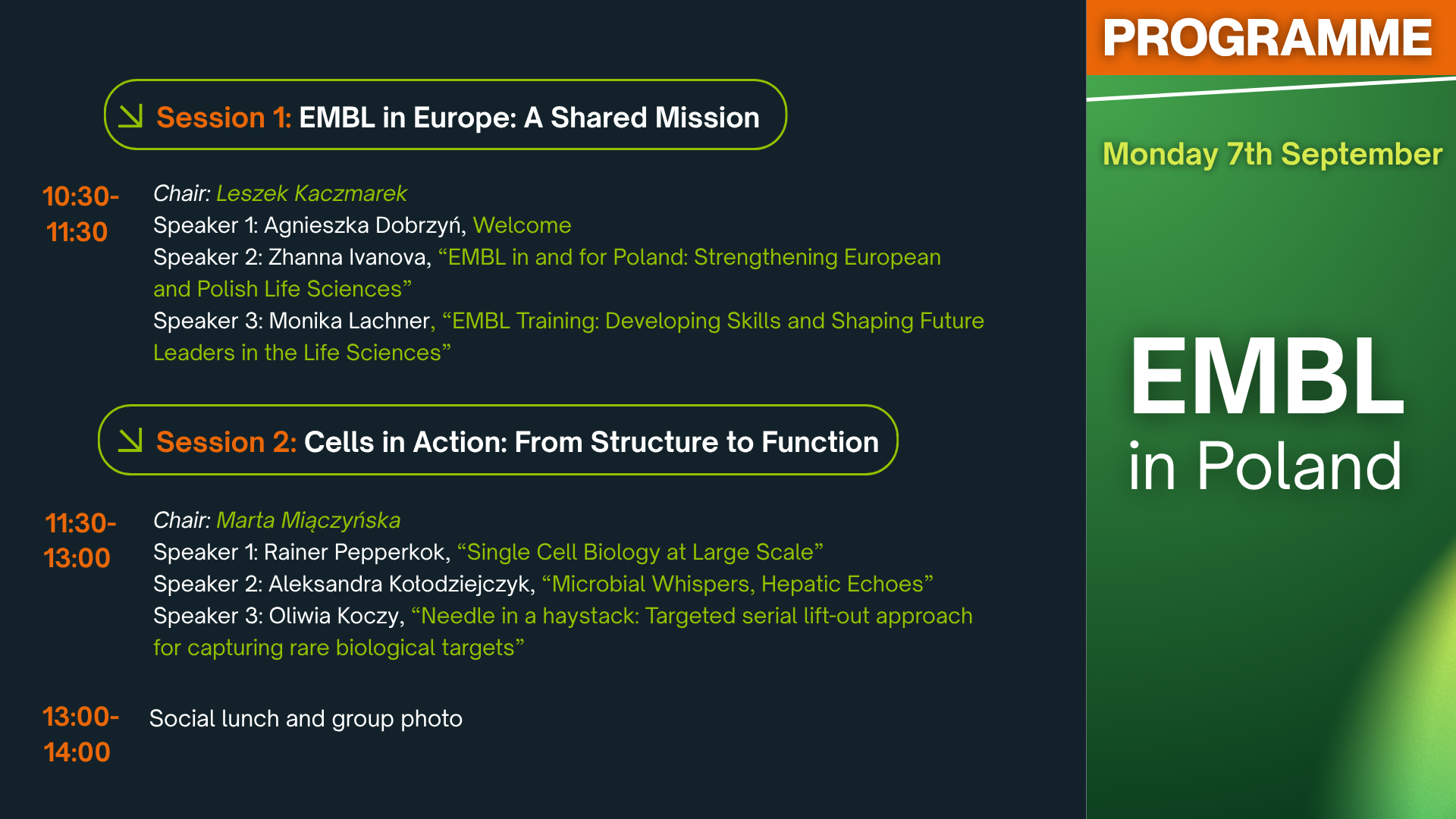
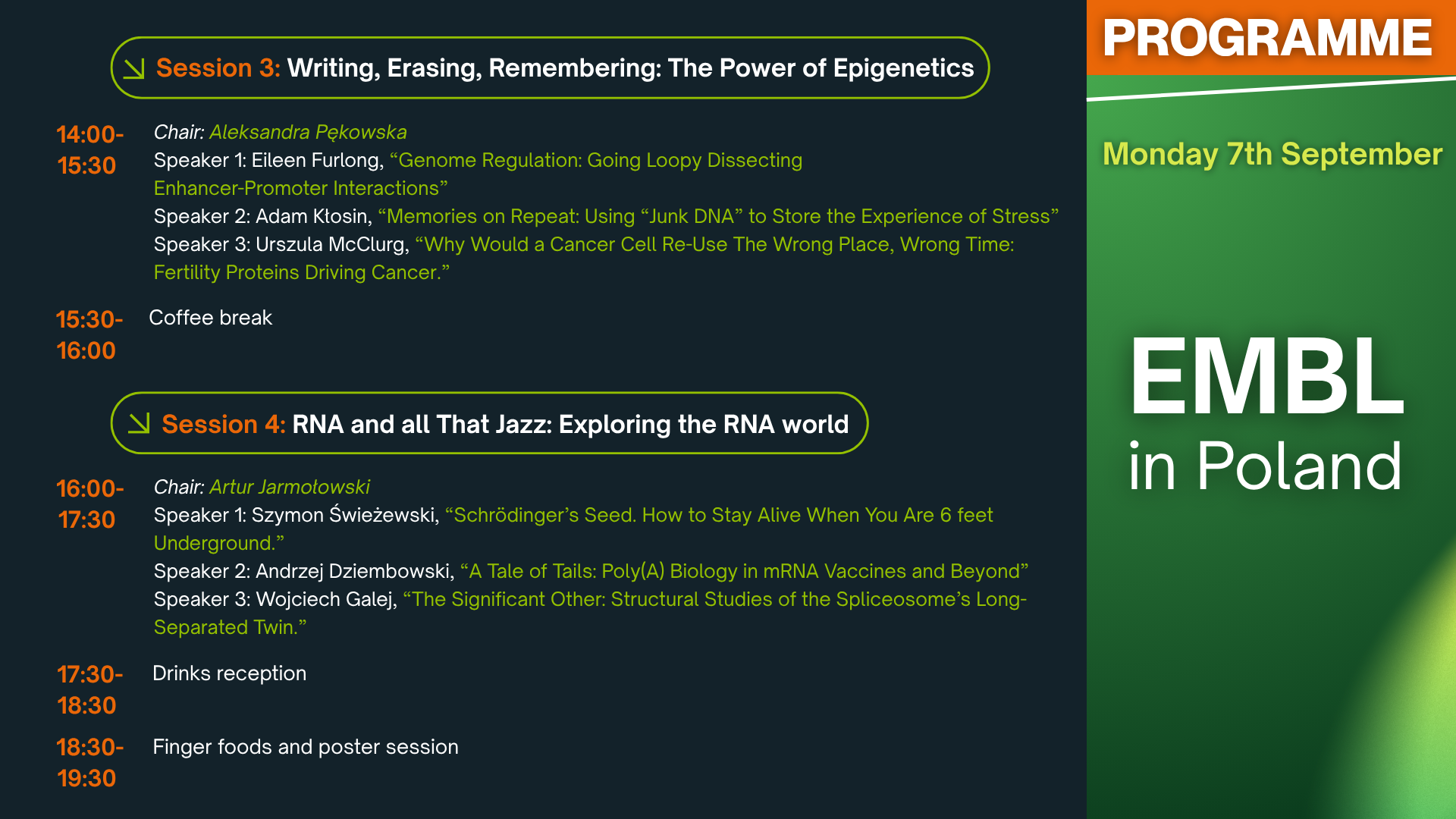
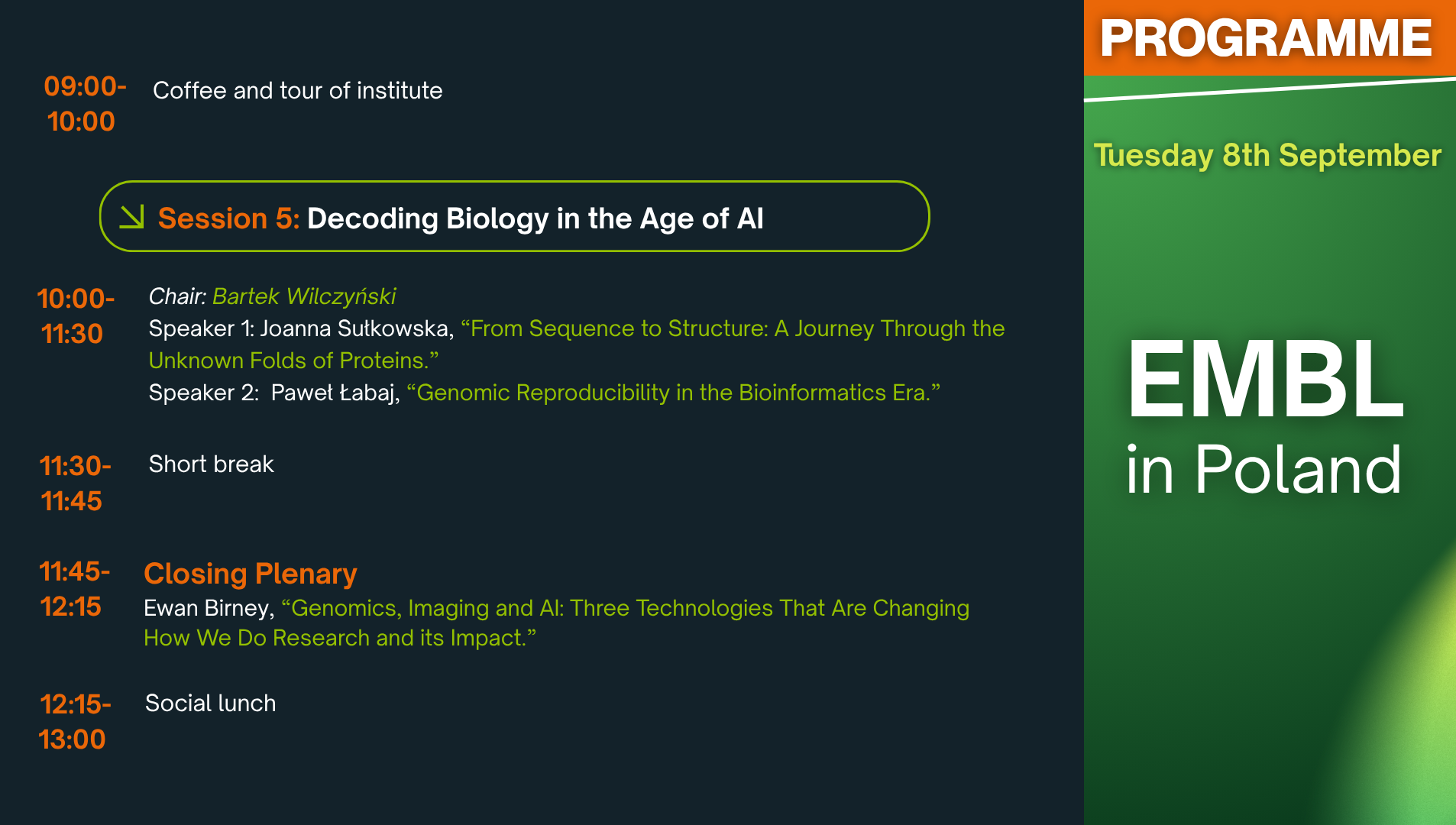
More information about EMBL and its activities will be available very soon. The "EMBL in Poland" meeting will take place on Monday, 7 September, from 10:00 to 19:30, and on Tuesday, 8 September, from 9:00 to 13:00 at the Nencki Institute.
"The Nencki Institute has been developing its cooperation with EMBL for years, and this sets us apart from other Polish research institutions. It is no coincidence that the EMBL community from Poland and across Europe is meeting here," Prof. Agnieszka Dobrzyń concludes.
A representative of the Ministry of Science and Higher Education spoke about this especially on the occasion of the event at the Nencki Institute.
Date
04 September 2026
Gallery